

On 27 November 2025, HUMAN MADE listed on the Tokyo Stock Exchange’s Growth Market. The brand was started in 2016 by NIGO — the designer who created A BATHING APE in the 1990s — and its shares opened at ¥3,440, nearly ten percent above the offer price.
The company’s stated purpose is “CULTIVATE CULTURE.” Its disclosure documents put it this way: to grow culture into a creative industry that represents Japan, following manga, anime and games. A fashion brand had volunteered itself for the IP business — intellectual property, meaning assets like characters and works that can be held, licensed and multiplied as rights.
The IP turn came before the listing
In January 2021, NIGO brought in Rehito Hatoyama as director and chief strategy officer. Hatoyama had been a managing director at Sanrio, where he took the Hello Kitty licensing business global. NIGO’s brief to him was: “Make HUMAN MADE big, the way you made Hello Kitty global at Sanrio.” The management team, in other words, was assembled on the premise that culture would be run as IP.
In May 2024, HUMAN MADE made Rei Matsunuma — formerly head of Uniqlo’s UT business — CEO and COO, and NIGO moved to a purely creative role. WWDJAPAN framed the arrangement as a question: how does a brand built on one man’s taste continue as a company if, hypothetically, he isn’t there? Revenue for the year to January 2025 was ¥11.2 billion, with an operating margin of 28 percent. Those are the numbers of a licensing company more than a clothing company.
The same summer, in Paris and Tokyo
Ramdane Touhami is a French-born creative director. Since the 1990s he has launched a string of clothing and fragrance brands, and in 2021 he and his wife sold Officine Universelle Buly — the old Paris apothecary they had revived — to LVMH. He now runs a shop called WORDS, SOUNDS, COLORS & SHAPES, in Paris and in Tokyo.
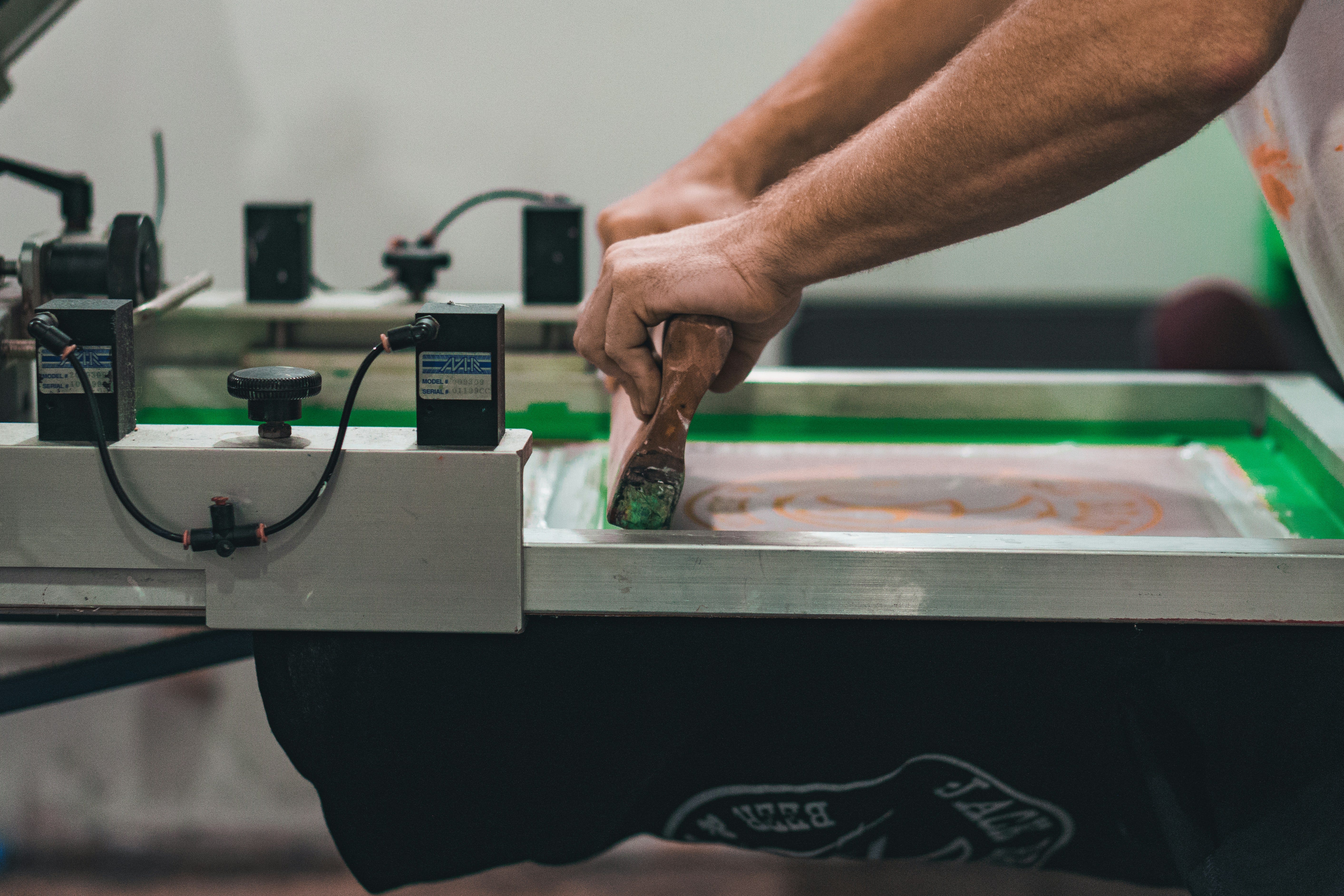
From 1 July to 31 August 2026 he ran the “24-HOUR PROPOSITION PROJECT.” One T-shirt design a day, on sale for twenty-four hours only. Sixty-two days, sixty-two designs. He gave eighteen studios in Paris, Munich, Tokyo and elsewhere a single theme — mountains — borrowed the rights to each design for twenty-four hours, took orders, and hand-printed every shirt in his own Paris workshop.
A personal name rather than a house name; a daily update rather than a collection; rights borrowed rather than owned. This too looks like an experiment in how to handle IP.
Touhami had resale in mind from the start. He built a way for anyone who missed a shirt to contact the buyer and ask to take it off their hands. In his own words, “like trading cards.” Make it limited, sell it out, let the price rise on the secondary market. That is HUMAN MADE’s engine exactly. And after the project ended, all sixty-two designs stayed up on the site.
Where the two of them are going
How do the two see what comes next?
HUMAN MADE’s CEO, Rei Matsunuma, said this in a 2025 interview: “More and more of the brand’s fans don’t know who NIGO is. Clothing has a short history in Japan, so a brand can end with a person’s lifetime. In a sense, growing beyond NIGO’s presence is where the brand’s growth lies.” The company he named as the one to learn from was LVMH.
Make the brand a structure that outlasts the person. That is the reason for the listing, and everything since follows from it: the three-floor flagship that opened in Harajuku in September 2026 (planned at ¥2–3 billion a year in sales), Shanghai in spring 2027, New York after that, and a plan for “at least one flagship per country.” The June announcement that HUMAN MADE would make UNDERCOVER — the brand of NIGO’s friend Jun Takahashi — a subsidiary is, in the company’s words, a step in “expanding the brand portfolio.”
Touhami, in a May 2026 interview with the FT, described his work in one line: “I create institutions.” The daily T-shirt ended after two months, but his shop WORDS, SOUNDS, COLORS & SHAPES is a platform rather than a brand, and inside it sit his own label (Die Drei Berge), an outdoor range linking Tokyo and Paris (A Young Hiker), a stationery line reviving the paper letter (Papier Royal), and a programme of archive publishing and exhibitions. He won’t list on any exchange. But what he’s doing — building something that keeps going after he’s gone — is what HUMAN MADE is doing.
Where Japanese fashion businesses are now
Japan’s best-known names abroad are probably Comme des Garçons, Yohji Yamamoto and Issey Miyake. Beyond them there are younger designers showing in Paris, brands stocked by select shops around the world, and independent labels that sell directly to their customers and build their own communities. Uniqlo was born here too. All of that is remarkable. But a fashion company that has gone public and then set out to run itself as IP — expanding on several fronts at once, by strategy — is, as far as I know, a first (Uniqlo is a mass-market manufacturer-retailer, and HUMAN MADE’s own disclosures place themselves in a different category).
Harajuku street fashion started in the 1990s. Now it has IP — the thing Japan is best at — on its side. How it builds a business from here is worth watching.