

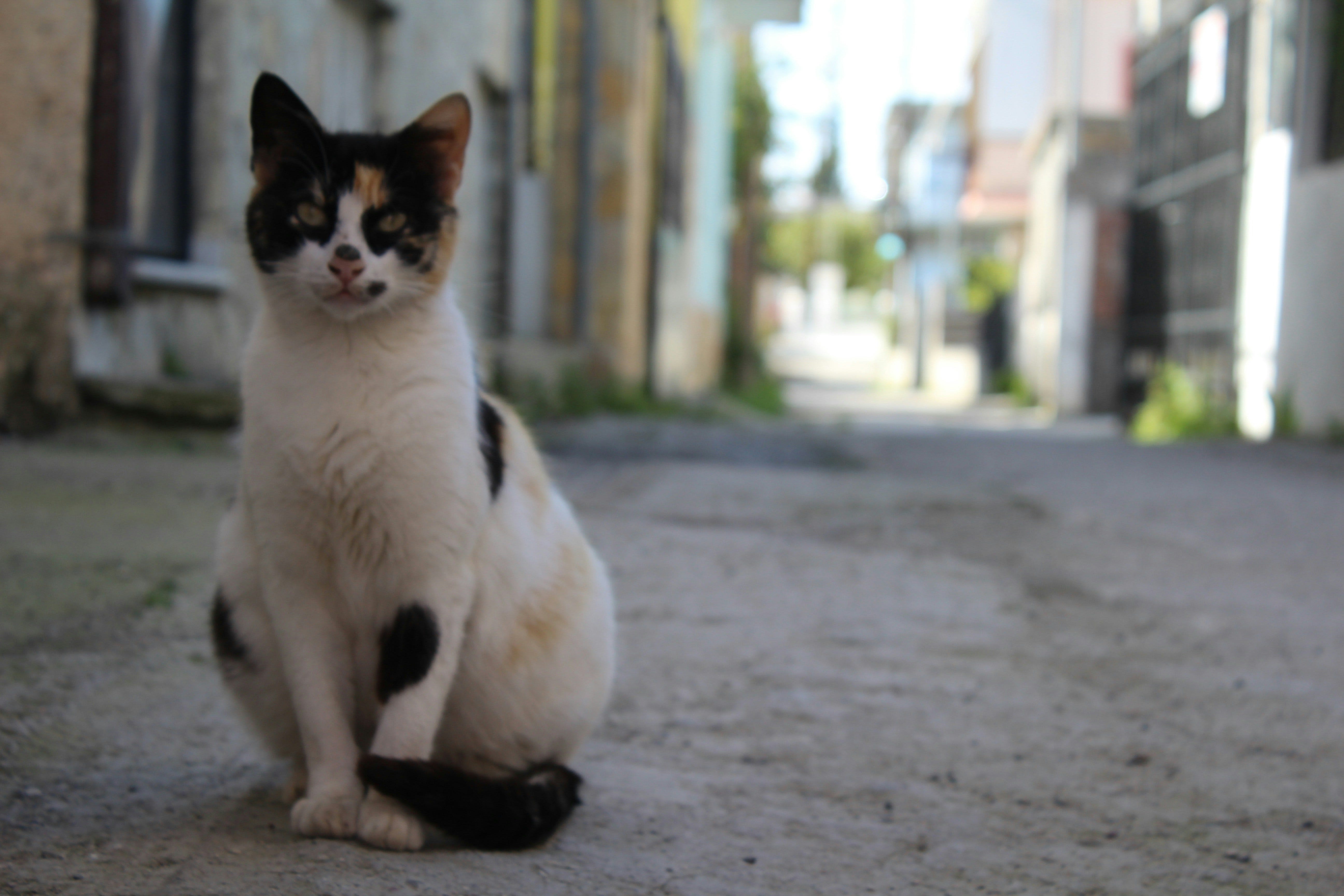
A year ago I flew to Montenegro by way of Istanbul, and the trip turned into an accidental pilgrimage.
It started in Istanbul. I was only there for a few hours, late at night on a layover — but even in that short time I kept meeting friendly cats on the street, people and cats mixing as the most natural thing in the world.
Then I reached Kotor, the walled Adriatic town folded into Montenegro's fjord-like bay. It had taken things further. Cats drape over the Venetian stonework, patrol the squares, turn up on the postcards and the souvenirs. There's literally a cat museum inside the old walls. The town treats them as descendants of the ship's cats that sailed in with centuries of Adriatic trade.
Somewhere between those two cities, an old theory of mine hardened into conviction: dogs joined the family; cats founded a religion. Once you see it, you start testing the theory in every city you visit. And every city passes.
The Theory
Why does the human relationship with cats keep drifting toward reverence, in cultures that share no religion, no history, no cuisine?
The dog's story explains itself. Over tens of thousands of years, dogs adapted to us. They read our hierarchies, learned our commands, took our jobs — herding, guarding, retrieving — and moved into the family on the family's terms. A dog wants to know its place in the pack, and the pack is us. That's why the dog became family: it joined on our rules.
The cat did something structurally different. Biologically, the housecat is barely domesticated. It's still a self-sufficient predator that could feed itself tomorrow if it chose. It came for the granary mice and stayed on its own terms: indifferent to hierarchy, unmoved by commands, affectionate at times of its own choosing. We never subordinated it, and everyone involved knows it.
And here's the mechanism I keep coming back to: worship is the posture humans take toward what they can't control but choose to keep close. Add the cat's particular effects — eyes that catch light in the dark, a silent physics-adjacent way of moving, a self-cleaning fastidiousness that reads as aristocratic — and the human nervous system does the rest. We don't own cats. We attend to them. The daily reality of a cat household is a human gently apologizing while serving food to a small indifferent god. We domesticated the dog. The cat domesticated our reverence.
The Old Faiths
This isn't a modern quirk. It's one of the oldest continuous patterns in civilization.
Ancient Egypt is the founding case, and it wasn't metaphorical worship. It was the state religion. Bastet, the cat-headed goddess, guarded home, fertility, and fortune. Herodotus reported that when a household cat died, the family shaved their eyebrows in mourning. Cats were mummified with full rites and buried in dedicated necropolises. Killing a cat, even by accident, could reportedly cost a person their life. The economics underneath were perfectly rational: Egypt was the ancient world's granary, and the animal that defended the grain from rats and snakes was defending the state itself. The first economy of grain built the first theology of cats.
Islam carried the reverence forward through affection rather than statute. The Prophet Muhammad's fondness for cats anchors a whole tradition — most famously the story that, rather than wake the cat Muezza asleep on his sleeve, he cut the sleeve off and went to prayer. Kindness to cats became threaded into everyday piety; cats may enter mosques where dogs may not. Modern Istanbul's street-cat culture — the one that ambushed me at the start of this essay, the one the documentary Kedi mapped so lovingly — is that centuries-old warmth, still running at municipal scale.
Europe supplies the dark chapter that proves the point in negative. In the medieval imagination the cat's uncanniness curdled: familiar of witches, agent of the devil, killed in great numbers during the witch-hunt centuries. The story goes that thinning the cats let the rats flourish just in time for the plague — history's tidiest parable of what happens when you drive off your pest control. Whatever the epidemiological truth, the structure is telling. Even the persecution treated the cat as a spiritual actor. Nobody burns an animal for being ordinary. Veneration and demonization are the same belief in different robes: this creature is more than it appears.
Cat Cities
Look at cities through this lens and they sort themselves. Some cities treasure their cats. Here are my most recent notes:
Kotor. The maritime case. Ship's cats came ashore with the fleets and never left; the town returned the favor with a museum, a mascot economy, and de facto freedom of the city. A port remembers who kept the grain and the rigging free of rats.
Istanbul. The city where kindness to cats became the norm. Centuries of Islamic tenderness toward cats, secularized into a whole city's default behavior: food left on ledges, cat-sized houses on corners, animals moving through mosques, bazaars, and ferries like minor officials on their rounds.
Tokyo. Animism — the belief that every natural thing has a spirit of its own. Japan keeps every layer of the faith at once. The beckoning maneki-neko (the raised-paw cat figurine that invites good fortune) in every shop window traces back to temple legend — Gōtokuji in Setagaya claims the original cat that waved a feudal lord in from a storm, and its grounds are now crowded with countless white figurines. The folklore keeps the fear layer too: the bakeneko and nekomata, cats that live too long and turn uncanny — reverence and wariness, shelved side by side. And at street level, the neighborhood-cat system — communities that collectively feed and care for their local cats — is the modern form of an old arrangement: the cat lives here; the humans look after it.
The Last Untamed Ones
So the pattern holds from Bastet to the alley behind your apartment: the one animal that never signed the contract is the one we ended up serving.
I think that's also why cats feel, right now, like a kind of relief. Everything else in a modern city has been optimized, monetized, put to work — us mostly included. The cat alone sits in the middle of it, unemployed and unbothered, looking straight through our laws, our status games, and our schedules with an expression that says silly humans. And we find it beautiful precisely because none of our machinery applies to it. The last untamed ones. Maybe that's the whole religion.
For the record: I'm not a cat person. Not a dog person either. I love both — sheep, goats, and horses too. But of all of them, the cat may be the only one I treat with something like reverence.
What's your favorite cat spot in the world — or one you'd love to visit? Tell me in the comments.
Subscribe to read essays from Tokyo and beyond.