

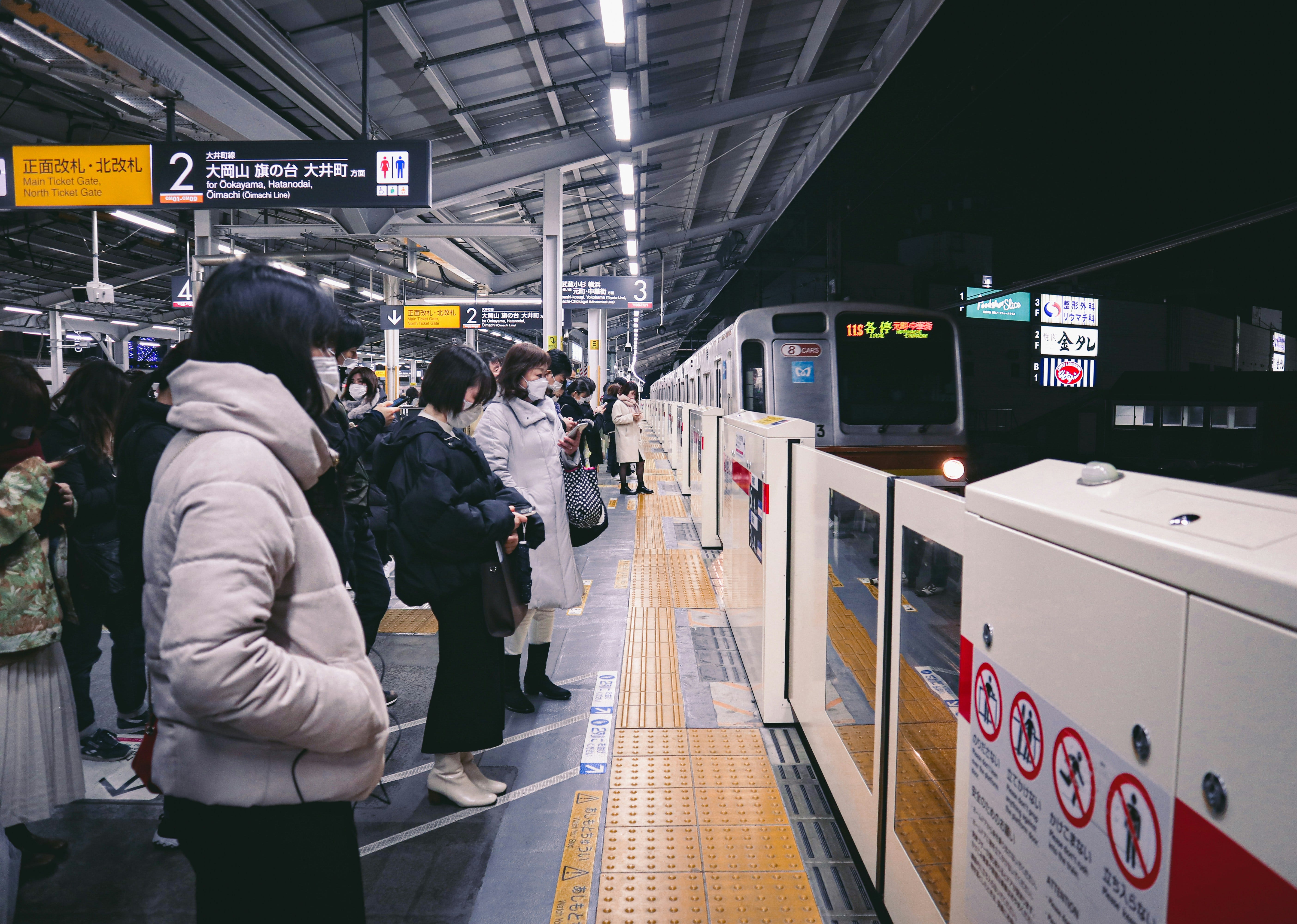
In the autumn of 2025, Gen Z — people born roughly between the late 1990s and 2010 — took to the streets around the world. In Nepal a social-media ban sent young people out, and the prime minister resigned. In Madagascar, protests over power and water cuts went all the way to a change of government. The same generation moved in the same months in Indonesia, the Philippines, Peru and Morocco. The wave didn't stop in 2026; this autumn it has moved to Europe — France, Spain, Germany, Albania. In Japan, it didn't happen.
To be precise, it isn't that Japan has no demonstrations. I've been to some myself. In the spring of 2026, rallies against constitutional revision and sending the Self-Defense Forces abroad were held in front of the Diet and at Osaka Station, and on Constitution Memorial Day some 50,000 people, by the organisers' count, gathered in a Tokyo park, with young faces noticeably among them. But that was young people joining an agenda the older generations have carried for decades. A protest by Gen Z, for Gen Z, on Gen Z's own agenda — Japan doesn't have one.
Two reasons
I think there are two main reasons. One is the mood: in Japan, demonstrating is itself seen as a bad thing to do. School doesn't teach you that objecting to things is good. The mood has a history. The way Japan’s student movements of the 1960s and 70s ended — remembered as extreme, a nuisance, bad for your job prospects — left a long aftereffect. When a student group stood in front of the Diet in 2015, it was dismissed as “trying too hard.” Elsewhere a demonstration is one ordinary form of political participation; in Japan it still sits slightly outside the lines.
The other is numbers: Japan's young are far fewer than its old. The young know very well that they can't win on the street by headcount.
Numbers
The two reasons are connected rather than separate. The countries where the protests caught fire are young. By the UN's estimates (World Population Prospects 2024, figures for 2026), the median age is 19 in Madagascar, 26 in Nepal, 27 in the Philippines, and around 30 in Indonesia, Peru and Morocco. Japan's is 50, the second-highest in the world. The sheer number of people who could fill a street is different, and so is the size of the backlash when politics puts the young last.
A side that knows it can't win by numbers goes for exit rather than voice: not voting, leaving the country, earning alone instead of through a company. In the framework the economist Albert Hirschman set out in Exit, Voice, and Loyalty, Japan's young have chosen exit, quite clearly. I don't think that's apathy. It's arithmetic.
Triggers
The triggers differ too. Gen Z protests abroad were set off by a sense of a future being taken away — a social-media ban, pension reform, tax rises, high youth unemployment. In France, at the end of September 2026, high-school students in the Paris suburbs blockaded their schools over crumbling buildings and overcrowded classrooms; the blockades spread to lycées and universities across the country, and by November they had joined up with opposition to the government's education reforms and a general strike. There, the condition of education itself was the trigger.
Japan has a labour shortage, and young people find jobs easily. It isn't that there's no discontent; it takes the shape of "take-home pay is low" and "social insurance costs too much" — but for a generation that has never known a boom, this is simply normal. Public safety and public services work, at least on the surface. So the discontent is hard to feel.
One person at a time
So I don't think the quiet of Japan's young necessarily means they've given up on everything. Instead of taking to the streets, they keep choosing to step away, move on, earn on their own. But those are choices made one person at a time; they don't gather, become a movement, or shift anything large.
In 2011 the sociologist Noritoshi Furuichi wrote, in The Happy Youth of a Desperate Country, that the young of a country with nothing to hope for are the ones most likely to say they're satisfied with life as it is. The young people in that book are now in their late thirties, and the generation after them grew up knowing no other Japan. When the Nippon Foundation asked 17-to-19-year-olds in 2022 whether they believed their own actions could change their country or society, 26.9% in Japan said yes. In the United States it was 58.5%, in South Korea 61.5%, in India 78.9%.
They haven't given up on everything — but perhaps no young person in Japan believes that an individual can change a big government or a big organisation.