

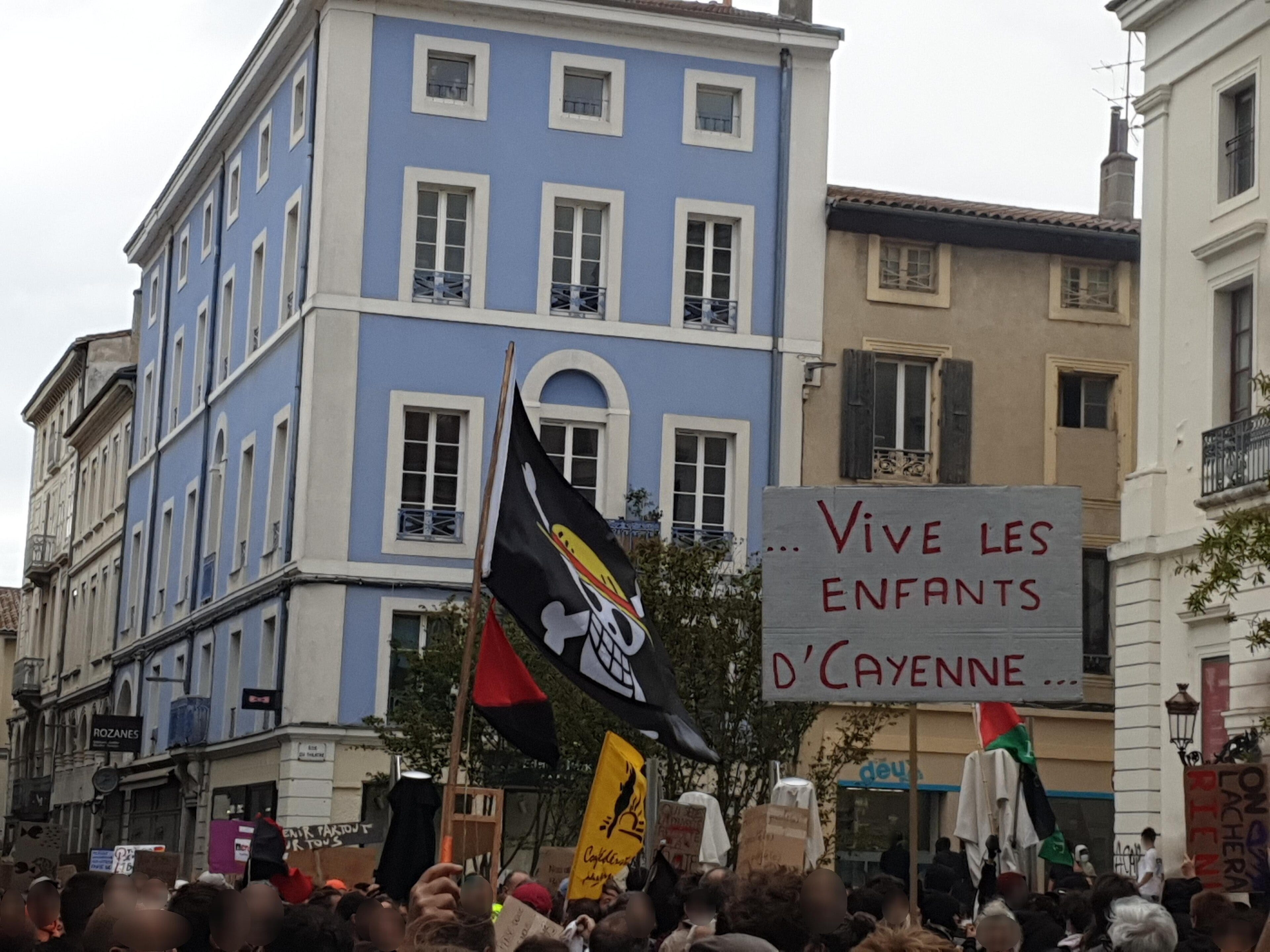
In the autumn of 2025, the young people filling the streets of Nepal’s capital weren’t holding a national flag or a party banner. They were holding the Straw Hat pirates’ skull from the Japanese manga One Piece. The same flag had been raised in Indonesia that August, and that autumn it turned up at demonstrations in the Philippines, East Timor, Peru, Morocco and Madagascar. Nepal’s prime minister resigned; Madagascar’s government fell. The wave didn’t stop in Asia and Africa. In France it flew on a national strike day in October 2025 and again at demonstrations in October 2026; in Mexico City at the “Generación Z” march of November 2025; and in January 2026 at an anti-ICE protest outside Trump Tower in New York. Characters from Japanese anime and manga have become the political symbols of a generation.
I watched this and thought: what an irony. One reason Japanese anime travelled so well is that it was pop culture with no politics in it at all — the product of a country that lost a war and adopted a peace constitution (the Constitution of Japan, in force since 1947, whose Article 9 renounces war and the maintenance of armed forces). With the defeat, this country’s culture stopped telling the national story head-on, and that made it easy to accept. The media scholar Koichi Iwabuchi called it “cultural odorlessness” — the argument in Recentering Globalization is that the absence of a Japanese smell is what let Pokémon and Hello Kitty into children’s bedrooms everywhere. And now that odourless culture is being carried into the most political scenes imaginable, in the places that took it in.
What’s missing isn’t the politics. It’s the country’s name
Think about it a little longer, though, and what’s missing turns out to be the name of the country, not the politics. One Piece is a story about pirates raising the flag of freedom against a “World Government” and a privileged class — about as head-on as a boys’ manga gets about power. Because the enemy isn’t any particular nation’s government, a young person in any country can read it as a story about their own rulers. Gundam and the Ghibli films are frank about fighting and destruction too, but no real flag ever appears. Politics that points at no nation is politics you can carry anywhere. An American hero’s shield can’t be raised on a Jakarta street. The Straw Hat flag can.
And the flag isn’t raised in Japan. There have been almost no Gen Z demonstrations here: demonstrating is itself seen as a bad thing to do, and the young are fewer than the old (I wrote about why in an earlier essay). A Japanese symbol of defiance, used around the world and nowhere at its source. In August 2025, Indonesia’s deputy speaker of parliament called the flag “a threat to national security” and officials moved to ban it; the president’s office later said it was fine as expression, so long as it wasn’t used to divide the country. A symbol accepted abroad because it carries no national smell gets named “anti-national” by a nation that accepted it, and goes unused by the nation that sent it.
The rebels and the White House raised the same flag
That could have been the whole story: a flag raised against power. Then, on 3 November 2026, the other side raised it. The White House’s official X account posted an image of the president, the vice-president and the secretaries of the Treasury, Defense and State as the Straw Hat crew — aboard the Going Merry, the Straw Hat Jolly Roger on the mainmast, captioned “The Mark of a Good Crew.” The flag that pirates raise against a World Government, raised by a government as its own. It has been viewed more than 18 million times.


This wasn’t a one-off. For a year and a half, U.S. government accounts have been using Japanese pop culture without the rightsholders’ permission. The posts are still up, so here they are, in order.
1. March 2025: a Ghibli-style arrest (the White House)
A woman being arrested by ICE, rendered as an AI image in the style of Studio Ghibli. That month, turning photos “Ghibli-style” with ChatGPT was a craze around the world.


2. September 2025: “Gotta Catch ‘Em All” (Department of Homeland Security)
A video of immigration raids cut with footage and music from the Pokémon anime, captioned with the franchise’s slogan.

The Pokémon Company said it “was not involved in the creation or distribution of this content, and permission was not granted for the use of our intellectual property.” A DHS spokesperson answered a reporter with a reworked line from the theme song: “To arrest them is our real test. To deport them is our cause.”
3. 5 March 2026: “MAGA” (the White House)
An image in the style of the new game Pokémon Pokopia.

The Pokémon Company International again: “We were not involved in its creation or distribution, and no permission was granted … Our mission is to bring the world together, and that mission is not affiliated with any political viewpoint or agenda.”
4. 6 March 2026: “JUSTICE THE AMERICAN WAY” (the White House)
A video using clips from Yu-Gi-Oh! and Dragon Ball.
The official Yu-Gi-Oh! anime account, in Japanese and English: the footage was used “without any authorization from the rights holder … no one associated with the manga or anime had any involvement, and no permission was granted.”

5. 12 March 2026: “UNDEFEATED” (the White House)
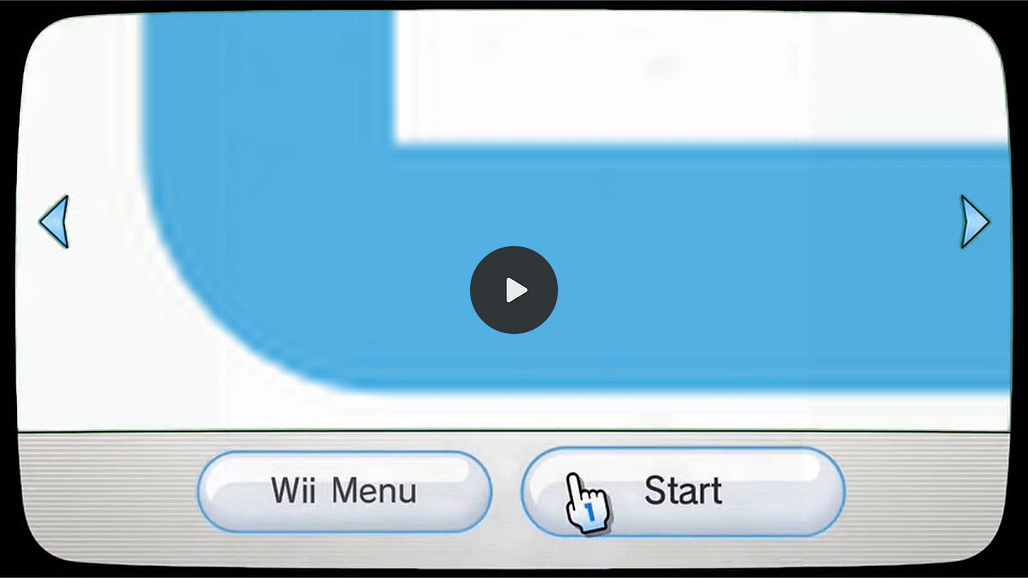
Wii Sports gameplay and the Wii start-up screen spliced with footage of strikes on Iran. Each tennis ball that lands cuts to strike footage.
6. April to September 2026: Japan’s requests, and a White House games site
On 17 April, in Japan’s parliament, Foreign Minister Toshimitsu Motegi said that “it is inappropriate to reproduce copyrighted works without the permission of the rightsholder,” public institutions included, and the Foreign Ministry conveyed Japan’s position to the U.S. Embassy in Tokyo. In June it made the request again. On 3 September the White House launched the White House Arcade, a site of 5 retro games promoting its policies.
7. 3 November 2026: the Straw Hat crew (the White House)
The post at the top. What Japan’s rightsholders have done in a year and a half is say, each time, that they didn’t give permission.
Is politically neutral culture bound to be co-opted by power?
Which brings me back to the first question. Is something that spread around the world precisely because it has no politics in it — politically neutral culture — fated, in the end, to be used by whoever holds more power?
Look at the history and the answer is close to yes.
Take the “Ode to Joy” from Beethoven’s Ninth. Strip the words and it belongs to no country, so anyone could use it. Nazi Germany played it at the opening ceremony of the 1936 Berlin Olympics; in the Cold War the combined German team used it in place of a national anthem at medal ceremonies; the Council of Europe made it its anthem in 1972 and the European Union in 1985 (the EU’s own description: “there are no words to the anthem; it consists of music only. In the universal language of music, this anthem expresses the European ideals of freedom, peace and solidarity”). The same tune, at the ceremonies of opposite regimes.
Or take Pepe the Frog. In 2005 he was a laid-back, likeable character in a comic by Matt Furie, who described him as “kind of a blank slate” and said he had no control over how people used him. In the 2016 U.S. presidential campaign the character became the face of racist memes, and that September the Anti-Defamation League added him to its database of hate symbols. What the creator could do was campaign to take the character back and sue Infowars, the conspiracy outlet that had been selling an unauthorised poster — settled in 2019 for $15,000.
In neither case, of course, did the maker mean any harm. That is exactly why they were used. Culture being put to work for propaganda and power is not limited to these cases; history is full of them.
Japan renounced war after learning from its defeat, and out of that came a pop culture with no “smell of the nation” — which is exactly why it crossed borders and travelled so far. Where it landed, the very thing called its strength ended up as a tool of state power. The irony could hardly be sharper.